
Green Day(s): Charleston Clay a Surface Unlike Any Other

PLAYER FIELD WEIGHS IN ON THE GREEN CLAY: ‘IT’S JUST DIFFERENT’
There’s much that makes the WTA’s annual Charleston tour stop unique.
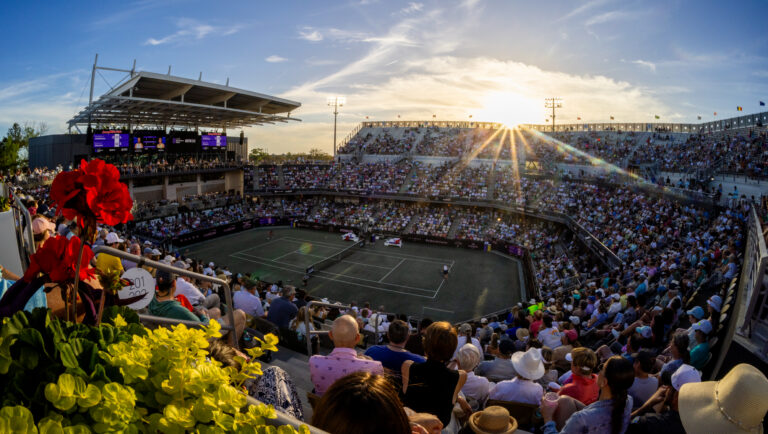
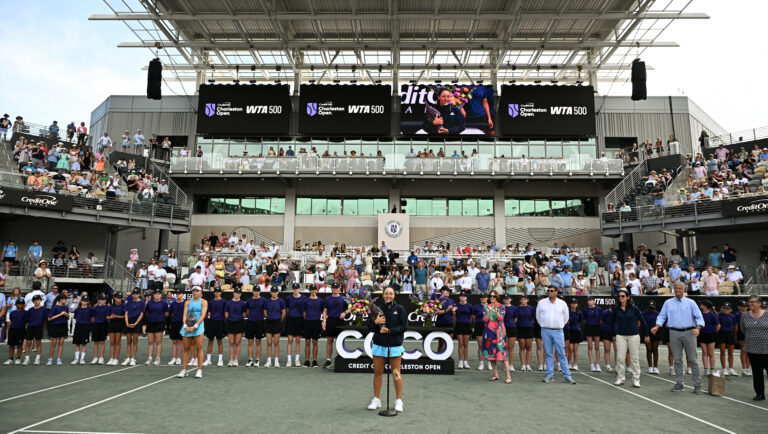
There’s the shrimp and grits, of course, and something called she-crab soup, complete with a splash of dry sherry. There’s scenic Rainbow Row, Pineapple Fountain and a cliched (but very real) sense of southern charm. But it’s the stuff that sticks to your shoes that perhaps sets this beloved tournament apart most. The circa 1973 Credit One Charleston Open, the oldest women’s-only professional tennis tournament in the U.S., is the only WTA or ATP tournament still played on green clay.
We talk a lot about playing surfaces in tennis: There are hard courts aplenty, from Flushing Meadows to the Coachella Valley; the crushed red brick of Paris (or as the French call it, terre battue); the emerald Perennial Ryegrass on the hallowed grounds of the All England Club. But the green clay of Daniel Island, which requires a whole lot of maintenance, including both above-ground and subterranean irrigation systems, is very much its own beast.
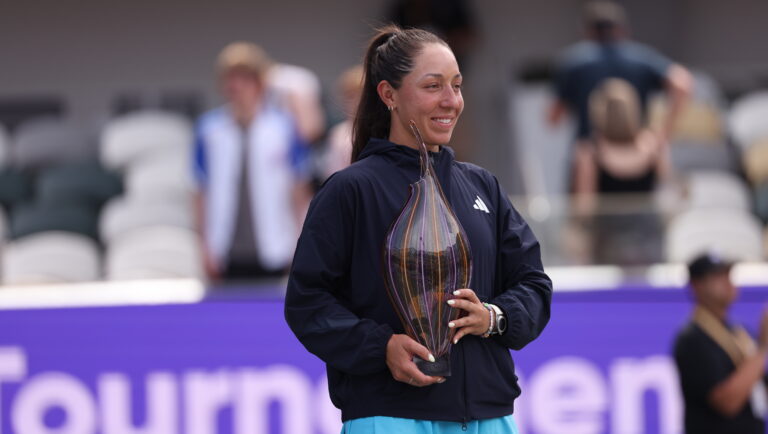
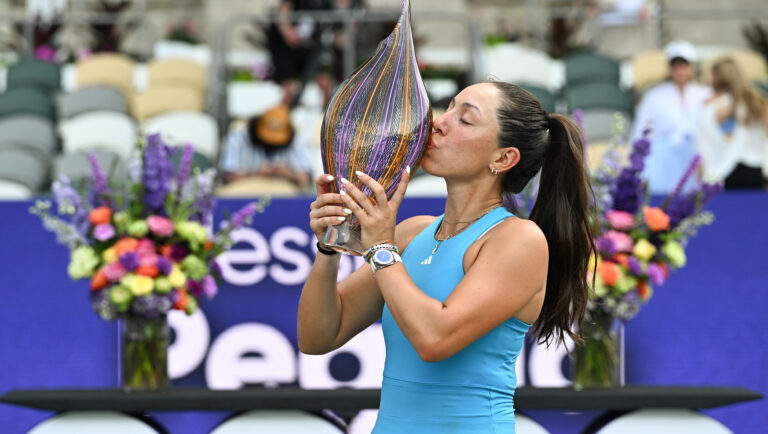
“It’s just a different surface,” said the 2026 Credit One Charleston Open’s top seed, Jessica Pegula, who last year captured the first clay-court title of her career here. “The green is more like these little pebbles that you can kick out of your clothes, whereas the red clay is more of a chalk. It’s a little bit different moving on it. It varies everywhere you play, but I think the green clay here can tend to play pretty fast.”
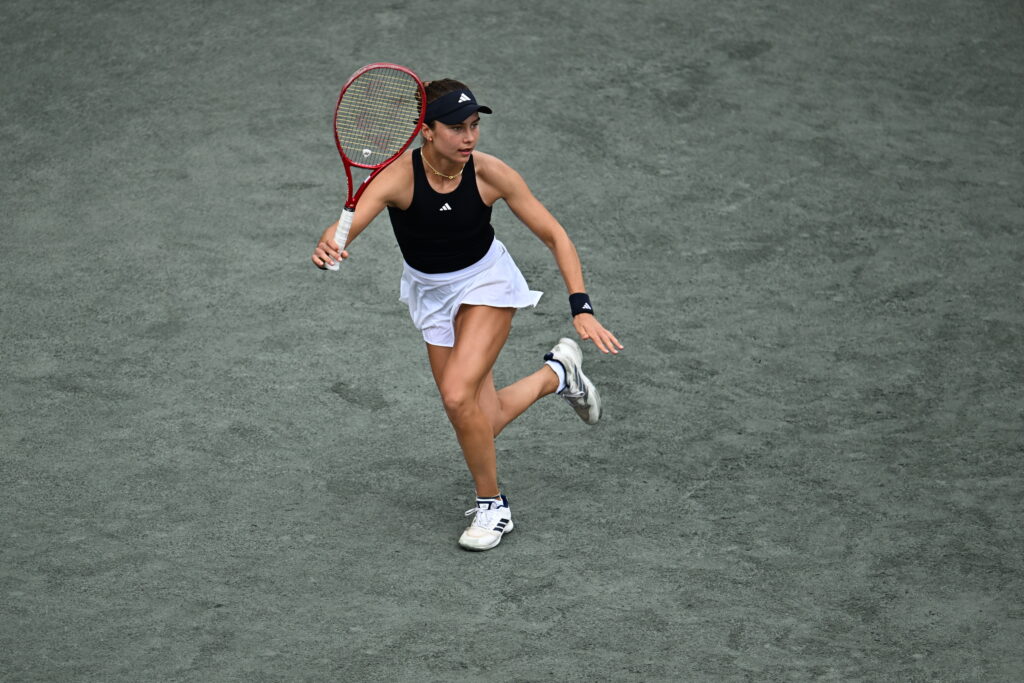
Iva Jovic
No one knows these courts better than Rob Eppelsheimer, who has been the facilities director at LTP Daniel Island for more than a quarter century, overseeing all the court preparation and maintenance. The onetime College of Charleston player says there’s a lot that goes into the upkeep.
“The green clay is a greenstone that’s mined out of the mountains of Virginia, and the company that I deal with is called Har-Tru out of Charlottesville,” he explained. “It’s all natural. The greenstone just gets crunched down until it becomes a very fine dust. Nothing artificial goes into it. The difference between green and red clay is that green tends to firm up a little bit more. It has a real solid base to it. And then you have top dressing. Some people call it ‘sliding material’, but it’s the top part of the court that sort of stays a little bit loose, letting them slide.”
Eighteen-year-old Iva Jovic, raised on Southern California cement, is competing in just her third career tour-level event on clay.
“I didn’t even know what clay was until I was 13,” said the fourth-seeded Jovic. “I went to Europe for some ITFs and played on it for the first time. I did not know how to slide, did not know how to play, did not know how to move on it. But I’ve spent a lot of time in Florida in the past couple years. They have much more clay there. I haven’t really played a ton on clay in my life, but when it’s clay season, I’m working on my movement every single day.”
It’s a small sample size, but how does the green clay of LTP Daniel Island differ from the red clay of Europe for Jovic?
“I think the movement is a bit different,” she said. “This clay is a little bit grainier, and it’s quite slippery. Someone who plays back behind the baseline can get wrong-footed very easily. It’s a little bit more icy, I would say, and the slides are a little shorter because it’s not as fine as red clay. If you can get people wrong-footed, you can almost make them fall on their face. It’s a little bit more tactile, where the red clay is much easier to slide and maneuver on.”
” If you can get people wrong-footed, you can almost make them fall on their face.” — Iva Jovic
Ashlyn Krueger, 21, grew up playing on green clay, something that paid dividends when she won the prestigious Orange Bowl in Florida in 2020, an international green-clay-court tournament with a long list of storied champions, Chris Evert, Andrea Jaeger, Caroline Wozniacki and Sofia Kenin, included.
“I think the green and the red are completely different,” she said. “The red is much softer; the green is much grittier. I feel very unstable. It’s slick, whereas the red, I feel like I can get into it a little bit more. I’m more comfortable in the red, but I also grew up playing on green, so it’s a weird situation. I’m happy that I have kind of the ability to adapt on both.”

Another former Orange Bowl champ, Canada’s Bianca Andreescu, sees Charleston as the ideal pivot point, as the tour goes from the North American hard courts to the red clay of Europe.
“I think it’s a great transition to the red clay, because it is a little bit faster,” she explained. “Coming from hard courts, you can still implement hard-court tennis in a way. You try to get matches in to kind of play around with it, how you want to play on the red clay. It’s a good introduction to the red-clay season in that way.”
Eppelsheimer had a calling for his line of work. Raised in Pittsburgh, Pa., he got into the court maintenance business early on.
“I came up in tennis, so the courts I grew up on as a young boy were clay, and I did a lot of maintenance,” he remembered. “It was kind of joke — I had these older guys who I looked up to, and I’d brush all the courts by hand, and line them, and they’d sit up on the hillside laughing at me. They’d buy me a Coke at the end of the day, and I thought that was the greatest.”













Related Articles